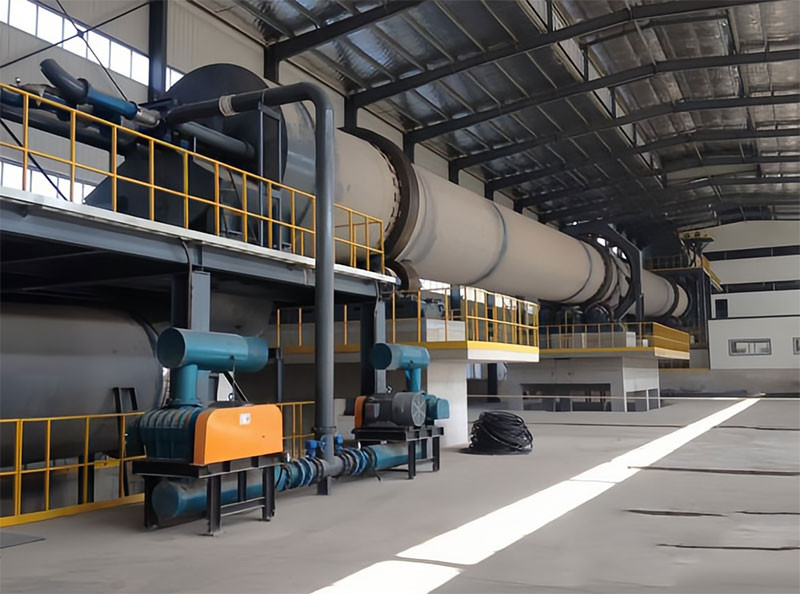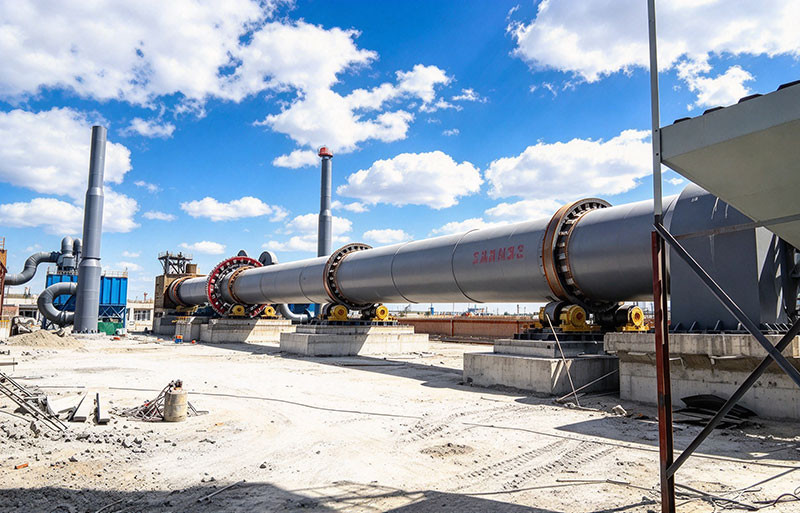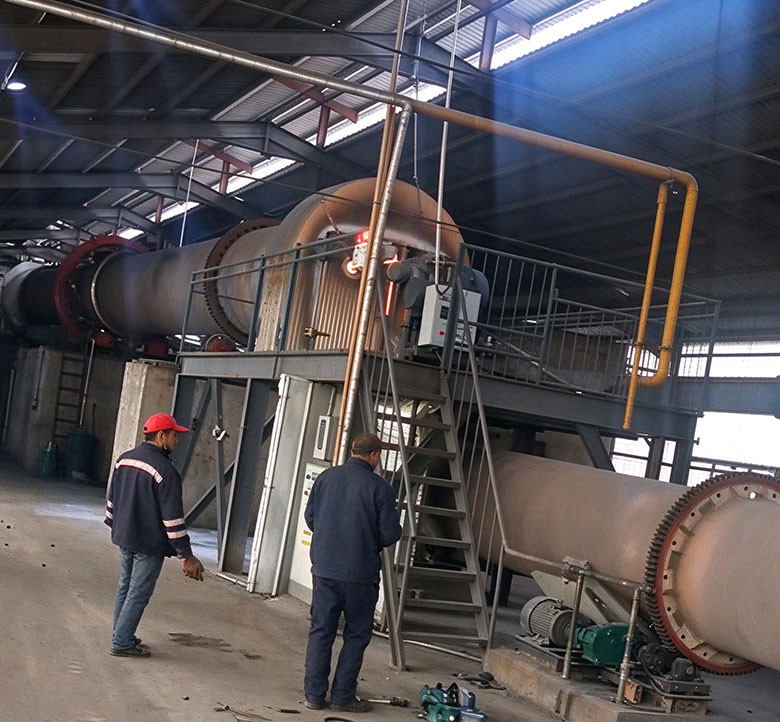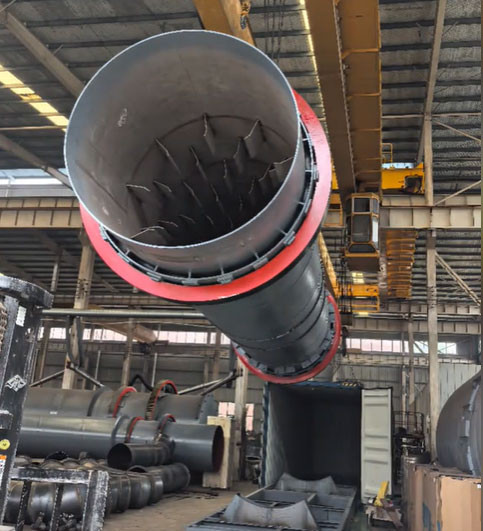
High-temperature processing drives some of the world's most essential industries — cement, lime, metallurgy, hazardous waste treatment, and advanced ceramics. In all of these, the rotary kiln is the equipment of choice, operating reliably at 900–1,450 °C.
But choosing the wrong kiln means premature refrailure failure, excessive fuel costs, inconsistent product quality, or a kiln that simply cannot reach the temperatures your process demands. This guide covers the key factors for selecting the right high-temperature rotary kiln.
1. Start with Your Temperature
This is the single most important question. Your required temperature determines everything else — refractory, shell material, burner, seals, and atmosphere control.
| Application | Temperature |
|---|---|
| Cement clinkerization | 1,350–1,450 °C |
| Fly ash vitrification | 1,200–1,450 °C |
| Dolomite/magnesia calcination | 1,200–1,450 °C |
| Iron ore pelletizing | 1,250–1,350 °C |
| Lime calcination | 1,100–1,300 °C |
| Zinc oxide production | 1,100–1,200 °C |
| Ceramsite/sand sintering | 1,050–1,200 °C |
| Hazardous waste incineration | 900–1,200 °C |
| Catalyst regeneration | 400–1,200 °C |
Key questions:
What is the maximum sustained burning zone temperature?
What is the temperature profile along the kiln length?
Are there exothermic reactions that could create localized hot spots?
Does the process need tight temperature tolerance (±20 °C)?
A kiln designed for 1,000 °C lime calcination cannot simply be "turned up" to 1,400 °C for cement. The construction must match the temperature from the start.
2. Choose the Right Configuration
| Configuration | Best For | Key Advantage |
|---|---|---|
| Long dry kiln (no preheater) | Small-scale; materials that cannot be preheated | Simple design |
| Kiln with vertical preheater | Lime, dolomite (granular feed) | 20–30% fuel savings; shorter kiln |
| Grate preheater kiln (Lepol) | Cement with high-moisture raw materials | Low dust; uniform clinker size |
| Suspension preheater (SP) | Cement up to ~3,000 TPD | Excellent heat recovery |
| Precalciner (NSP) | All modern cement plants above 1,000 TPD | 50–70% more capacity than SP at same diameter |
| Co-current with chain grate | Ceramsite, expanded aggregate | Optimal expansion control |
Quick guide:
Cement 1,000+ TPD → NSP precalciner
Cement < 1,000 TPD → SP or Lepol
Lime (any capacity) → Vertical preheater
Zinc oxide → Direct-fired Waelz kiln
Hazardous waste → Direct-fired with secondary combustion chamber
Iron ore pelletizing → Grate-kiln system
3. Get the Refractory Right
Refractory is the most critical — and most frequently replaced — component. Wrong specification means chronic problems.
Zone-by-Zone Material Selection
| Zone | Temperature | Refractory |
|---|---|---|
| Preheat zone | 200–900 °C | High-alumina brick (Al₂O₃ 50–70%) |
| Transition zone | 900–1,200 °C | Magnesia-alumina spinel brick |
| Burning zone | 1,100–1,450 °C | Magnesia-chrome or magnesia-spinel brick |
| Discharge zone | 1,000–1,300 °C | High-alumina or SiC-based brick |
Single-Layer vs. Dual-Layer: A Critical Decision
Single-layer: One thickness of working brick (e.g., 200 mm magnesia-chrome).
Dual-layer: Working brick + insulating backup (e.g., 150 mm magnesia-chrome + 65 mm insulating firebrick).
Research shows the dual-layer design reduces external heat loss by 57.8%. Additional findings:
In single-layer designs, heat loss increases exponentially as the lining wears — 45 mm of wear increased heat loss by ~30%
In dual-layer designs, the insulating layer is unaffected by wear — heat loss increases by only ~11%
Lower shell temperature means less thermal expansion, less stress on gears and bearings, and longer structural life
For any kiln above 1,100 °C, the dual-layer design is strongly recommended.
Special Chemical Environments
| Environment | Problem | Solution |
|---|---|---|
| High-alkali clinker | Alkali attack on refractory | Alkali-resistant high-alumina brick |
| High-sulfur lime/dolomite | Sulfate degradation | Low-iron magnesia-spinel brick |
| Chlorine-containing waste | Severe chloride corrosion | High-chromium brick |
| Zinc oxide production | Zinc vapor penetration | Dense, low-porosity magnesia-chrome brick |
Installation Matters
Even the best brick fails prematurely if installed incorrectly:
Shell-to-brick clearance: ±3 mm tolerance
Mortar joints: 1–2 mm maximum
Heat-up rate: 50–80 °C/hour — rushing is the #1 cause of premature failure
Cool-down: controlled, not rapid — thermal shock cracking kills bricks
4. Design the Combustion System
Burner Selection
For high-temperature processing (above 1,100 °C), a multi-channel burner is the industry standard:
Adjustable flame shape (long/short, narrow/wide)
Multi-fuel capable (coal, gas, oil, alternative fuels)
Low NOx through staged combustion
Independent control of primary air and fuel streams
Fuel Choice
| Fuel | Flame Temp | Cost | Emissions |
|---|---|---|---|
| Pulverized coal | 1,800–2,200 °C | Low | Higher SO₂, NOx |
| Natural gas | 1,900–2,100 °C | Moderate–high | Low SO₂, moderate NOx |
| Petroleum coke | 2,000–2,200 °C | Low | High SO₂ (if high-sulfur) |
| Alternative fuels | Variable | Very low | Variable |
Combustion Air
At high temperatures, air management is critical:
Primary air (10–15%): Through the burner at ambient temperature
Secondary air (70–85%): Hot cooler air (600–1,000 °C) — the main heat recovery mechanism
Tertiary air (precalciner kilns only): Cooler air diverted to the calciner
A well-designed system recovers 60–70% of the clinker's sensible heat through the cooler air system.
5. Consider Atmosphere Control
| Atmosphere | Used For | How |
|---|---|---|
| Oxidizing | Cement, lime, most calcination | Excess air (3–6% O₂) — standard |
| Reducing | Zinc oxide, iron ore reduction | Carbon reductant in feed consumes O₂ |
| Inert | Steel turnings, catalyst processing | Nitrogen injection, O₂ below 2–5% |
For reducing and inert atmospheres, kiln seal quality and oxygen monitoring become critical design requirements.
6. Mechanical Design for High Temperatures
Shell
Material: Q345B or ASTM A516 Gr.70 minimum. Above 1,300 °C, specify Q345C/D with guaranteed low-temperature toughness.
Thickness: Must increase in the burning zone:
Preheat zone: 16–20 mm
Transition zone: 20–25 mm
Burning zone: 25–40 mm (up to 50 mm for kilns above φ3.0 m)
Kiln Shell Scanner — Not Optional
Above 1,100 °C, an infrared shell temperature scanner is essential, not a luxury. It detects:
Hot spots from refractory failure — can burn through the shell in hours if undetected
Cold spots from ring formation inside the kiln
Wear trends that enable proactive maintenance scheduling
One avoided shell burn-through pays for the scanner many times over.
Seals
| Seal Type | Temperature Rating |
|---|---|
| Steel leaf spring | Up to 600 °C |
| Ceramic fiber labyrinth | Up to 1,100 °C |
| Combined steel + ceramic fiber | Up to 1,200 °C |
For kilns above 1,100 °C, ceramic fiber labyrinth seals are the standard — they accommodate thermal expansion while minimizing air leakage.
Girth Gear
High shell temperatures (200–350 °C near the gear) can cause thermal distortion. Use floating gear mounting with spring spacers to accommodate differential expansion.
7. Exhaust Gas Treatment
| Application | Key Pollutants | Treatment |
|---|---|---|
| Cement | Dust, NOx, SO₂ | Bag filter/ESP + SNCR/SCR |
| Lime | Dust, SO₂ | Cyclone + bag filter |
| Zinc oxide | ZnO dust, SO₂ | Settling chamber + cooler + bag filter + scrubber |
| Hazardous waste | Dust, acid gases, dioxins | Quench + acid scrubber + activated carbon + bag filter |
| Steel turnings | Oil vapor, VOCs | Cyclone + condenser + bag filter + activated carbon |
All bag filters must be rated for maximum exhaust temperature (typically 200–250 °C). Install temperature protection upstream — cold air dilution damper or emergency water spray.
8. Think Total Cost, Not Purchase Price
Over 20 years, the kiln purchase price is only 10–20% of total cost:
| Cost | 20-Year Share | What Drives It |
|---|---|---|
| Equipment purchase | 10–20% | Size, materials, complexity |
| Refractory | 20–35% | Quality, lining design, burning zone temperature |
| Energy | 20–30% | Preheater type, fuel, specific consumption |
| Maintenance | 10–15% | Component quality |
| Downtime | 5–15% | Refractory life, reliability |
Where to Invest
| Investment | Return |
|---|---|
| Dual-layer refractory | 57.8% heat loss reduction; longer lining life |
| Proper preheater | 20–30% fuel savings |
| Premium shell plate in burning zone | Prevents cracking; extends structural life |
| Quality girth gear | 15–20 year life vs. 5–7 for cheap gears |
| Multi-channel burner | Consistent temperature = consistent quality |
| Kiln shell scanner | Prevents catastrophic failure; pays for itself once |
Quick Selection Checklist
| # | Question |
|---|---|
| 1 | Maximum burning zone temperature? |
| 2 | Material being processed and required product? |
| 3 | Required throughput (t/h or t/day)? |
| 4 | Feed size and moisture content? |
| 5 | Atmosphere required (oxidizing, reducing, inert)? |
| 6 | Available fuel type? |
| 7 | Environmental emission limits? |
| 8 | Preheater system needed? |
| 9 | Product quality specification? |
| 10 | Evaluating total cost or purchase price only? |
Why Henan Hongke Machinery?
Henan Hongke Heavy Machinery Co., Ltd., based in Henan Province, China, designs and manufactures rotary kilns for high-temperature applications across cement, lime, magnesium, zinc oxide, metallurgical, and environmental industries.
Application-specific engineering — every kiln designed for your temperature, material, fuel, and atmosphere
Premium refractory design — single-layer and dual-layer systems tailored to each application
In-house manufacturing — shell, girth gear, tires, supports, and seals all made in our own facility
Complete system supply — preheater through kiln, cooler, burner, and gas treatment
Proven track record — kilns delivered for cement (1,450 °C), lime (1,250 °C), zinc oxide (1,200 °C), magnesium (1,250 °C), and hazardous waste (1,200 °C)
Global experience — installations across Asia, Africa, Middle East, and South America
Have a high-temperature processing application? Contact us with your temperature, material, and capacity requirements.