 WhatsApp:+86 155 1698 1316
 WeChat:+86 155 1698 1316
 Email:sales@rotarykilnchina.com
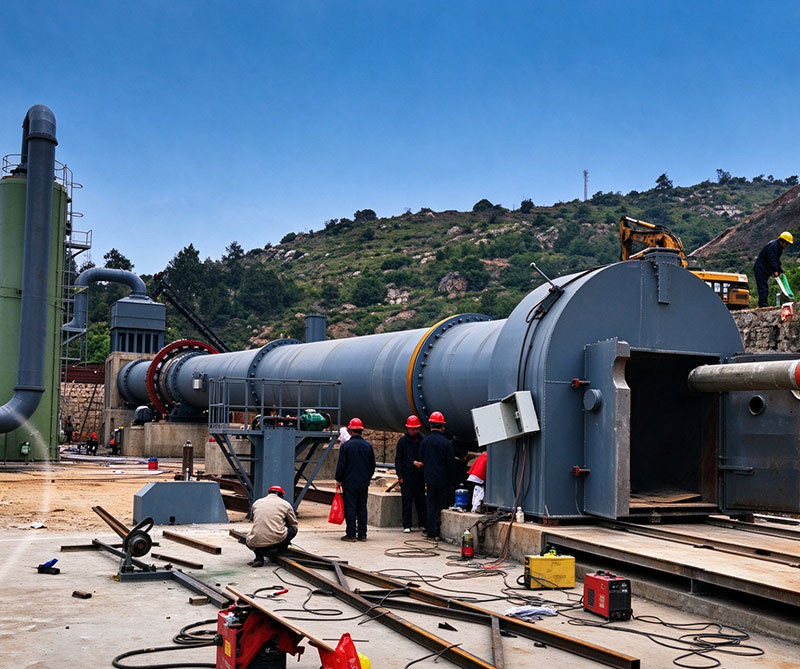
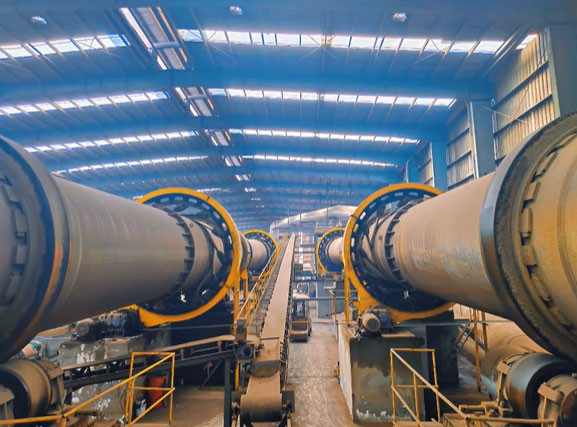
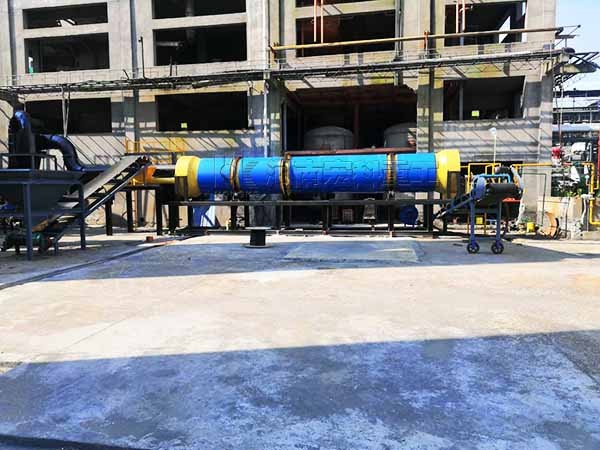
Henan Hongke Heavy Machinery Co., Ltd. ("Henan Hongke Machinery") has completed the manufacturing of a φ1.2 × 10 m rotary dryer for a chemical sludge treatment project in Hubei Province, China. The equipment is being prepared for shipment to the client's site.
The client needed a reliable drying system to reduce chemical sludge moisture from ~80% down to 20–30%, converting wet, unmanageable waste into dry material suitable for incineration, solidification, or further processing.
Equipment Specification
| Parameter | Specification |
|---|---|
| Dryer type | Indirect heat rotary dryer |
| Shell diameter × length | φ1.2 × 10 m |
| Shell material | Q235B carbon steel with SS304 stainless steel liner |
| Rotational speed | 3–8 rpm (variable, VFD) |
| Feed moisture | ~80% |
| Discharge moisture | 20–30% (adjustable) |
| Capacity | 1.5–3.0 t/h |
| Heat source | Coal-fired hot air furnace / natural gas (configurable) |
| Hot air inlet temperature | 600–750 °C |
| Drive motor | 15 kW |
Key Design Features
Chemical sludge is aggressive, sticky, and variable. Standard dryers are not built for it. This dryer was specifically engineered with:
SS304 stainless steel lining in the feed and high-moisture zones for corrosion resistance
Indirect heating — hot gases heat through the shell wall without contacting the sludge, reducing exhaust gas volume and secondary pollution risk
Optimized lifting flights designed for sticky, cohesive sludge — preventing buildup and ensuring uniform drying
Sealed feed and discharge ends with labyrinth seals to contain odors and hazardous vapors
Integrated exhaust gas scrubber — a spray tower with recirculated caustic solution for odor and contaminant removal before stack discharge
How It Works
1.Feed: Wet sludge enters the inclined drum via a screw feeder at a controlled rate
2.Drying: Internal flights lift and cascade the sludge through the hot zone as the drum rotates. Moisture evaporates through three stages — preheat, constant-rate, and falling-rate drying
3.Discharge: Dry sludge exits at 20–30% moisture, collected by a sealed conveyor
4.Exhaust treatment: Moisture-laden gas passes through the condensation/scrubbing system before stack discharge
Performance Advantages
| Advantage | Benefit |
|---|---|
| 60–75% volume reduction | Lower transport and disposal costs |
| Continuous operation | Stable throughput, no batch-cycle downtime |
| Indirect heating | Smaller gas treatment system, cleaner emissions |
| Adjustable parameters | Speed, temperature, feed rate — all variable |
| SS304 liner | Extended life in corrosive chemical environments |
| Compact footprint | ~14 m × 4 m — fits existing industrial sites |
| Low maintenance | Simple structure, few wear parts |
Why Rotary Dryer for Chemical Sludge?
Among available sludge drying technologies (belt, paddle, fluidized bed, thin-film), the rotary dryer offers distinct advantages for chemical sludge:
Tolerates variable feed — large thermal mass and 20–40 min residence time handle composition fluctuations
Handles sticky materials — mechanical tumbling breaks up lumps that would clog other dryer types
Proven technology — decades of operating experience worldwide in sludge applications
Lower capital cost — competitive installed cost per ton for mid-range capacities
Client Feedback
"We visited several dryer manufacturers before choosing Henan Hongke Machinery. The fabrication quality — welding, fit-up, stainless steel work — gave us confidence this equipment will perform reliably. The technical team was responsive throughout, and the project was managed professionally from start to finish."
About Henan Hongke Machinery
Henan Hongke Heavy Machinery Co., Ltd., based in Henan Province, China, manufactures industrial rotary equipment — rotary dryers, rotary kilns, and rotary coolers — for the chemical, environmental, metallurgical, mining, and building materials industries. Full in-house manufacturing, from engineering through production, installation supervision, and after-sales support.