 WhatsApp:+86 155 1698 1316
 WeChat:+86 155 1698 1316
 Email:sales@rotarykilnchina.com
1. Project Overview
In 2025, a metallurgical enterprise on the island of Sulawesi, Indonesia, commissioned a state‑of‑the‑art zinc oxide rotary kiln production line with a designed daily output of 180 metric tons of zinc oxide (ZnO). The project was conceived to process locally sourced zinc‑bearing industrial residues and low‑grade zinc ores, converting them into high‑quality zinc oxide products for the rubber, ceramics, and chemical industries across Southeast Asia.
The facility was engineered to operate continuously, 24 hours a day, under the tropical climate conditions characteristic of the Indonesian archipelago. From the outset, the design team prioritized thermal efficiency, environmental compliance, and long‑term mechanical reliability — lessons drawn from prior rotary kiln deployments in the region where Chinese‑manufactured equipment had demonstrated uninterrupted operation for over 14 months without major overhauls.
2. Raw Materials and Feedstock
The production line is designed to process a wide spectrum of zinc‑bearing raw materials, including:
Zinc oxide ores (low‑grade, with zinc content of 15–25%)
Zinc concentrates and zinc calcine
Steel mill dust (electric arc furnace dust, blast furnace gas sludge, converter secondary dust)
Zinc‑containing sludge and tailings from hydrometallurgical operations
Imported zinc‑bearing flue dust and lead smelter slag
The primary reducing agent is coke breeze or anthracite coal fines, mixed with the zinc‑bearing feedstock in a carefully controlled ratio. In the Indonesian installation, the typical coke‑to‑ore mass ratio is maintained at approximately 0.30–0.35 : 1, ensuring adequate reduction while minimizing excess carbon in the discharged slag.
3. Production Line Configuration
The complete 180 TPD zinc oxide rotary kiln production line comprises seven integrated subsystems, each performing a critical function in the overall process chain:
3.1 Batching and Proportioning System
This subsystem ensures precise metering of zinc‑bearing feedstock and reductant. It consists of a multi‑hopper gravimetric batcher, belt conveyors, and a paddle mixer that thoroughly blends the ore and coke fines into a homogeneous charge. Water may be added to facilitate subsequent pelletizing.
3.2 Pelletizing and Feeding System
The blended mixture is fed into a disc pelletizer or ball press, producing green pellets of 8–15 mm diameter. These pellets are then transported via belt conveyor or bucket elevator to an elevated storage hopper at the kiln tail. A variable‑speed screw or disc feeder meters the pellets into the kiln through a sealed feed chute.
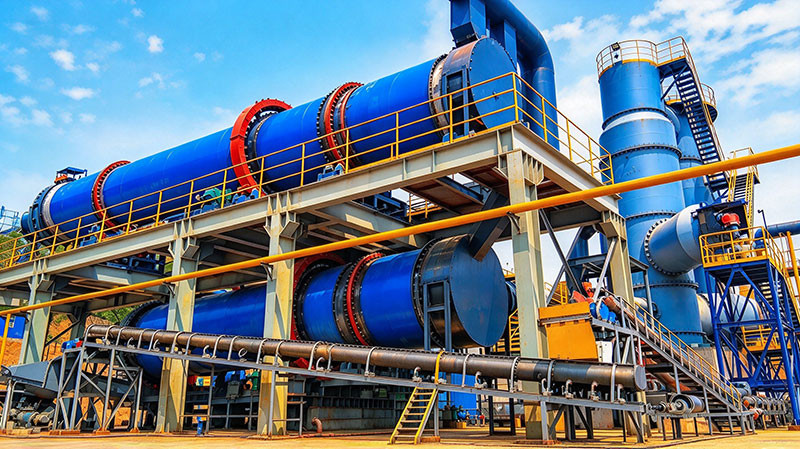
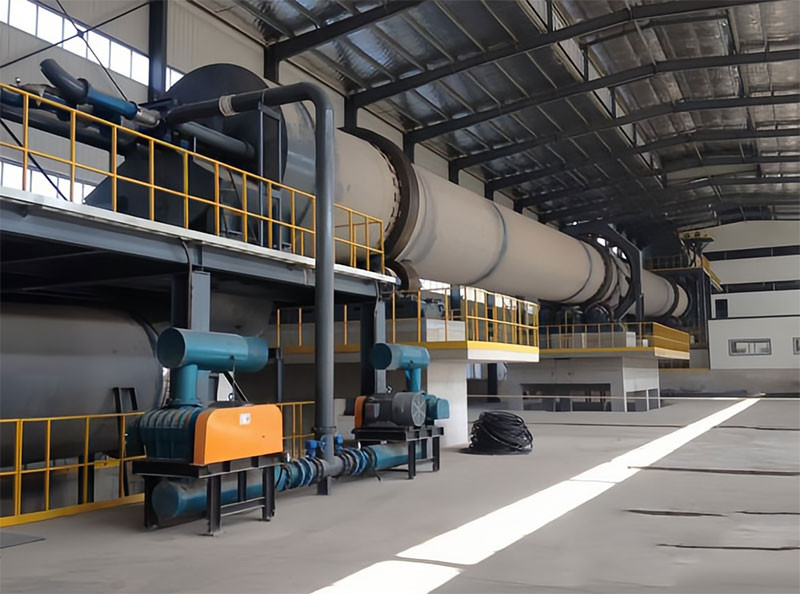
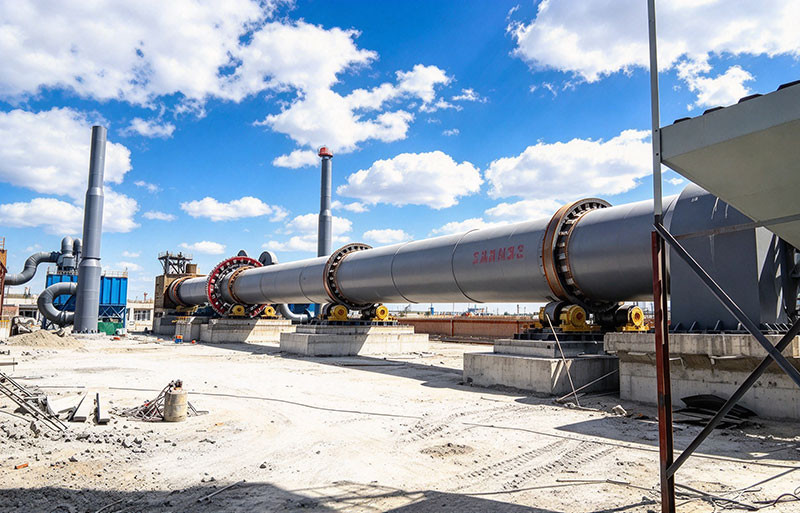
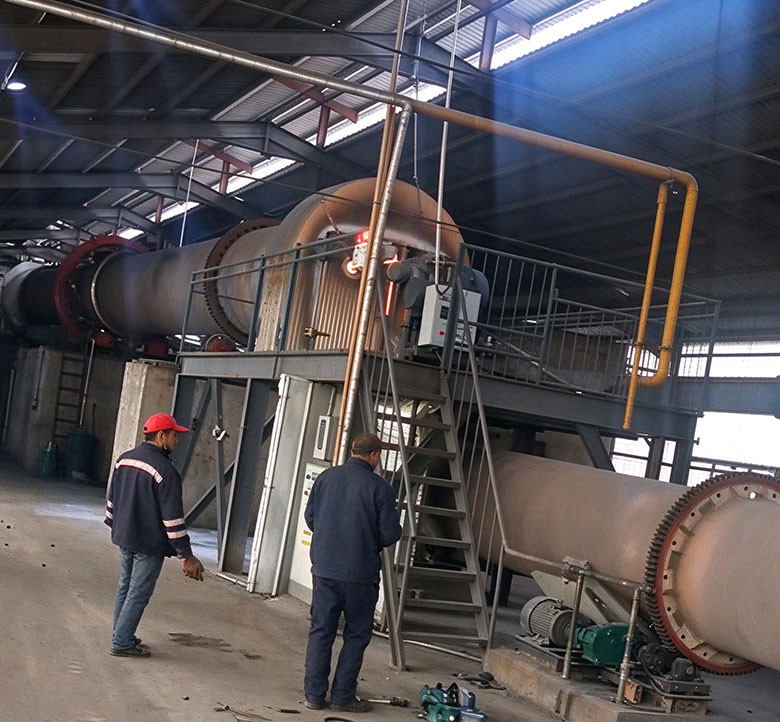
3.3 Rotary Kiln System — The Core Equipment
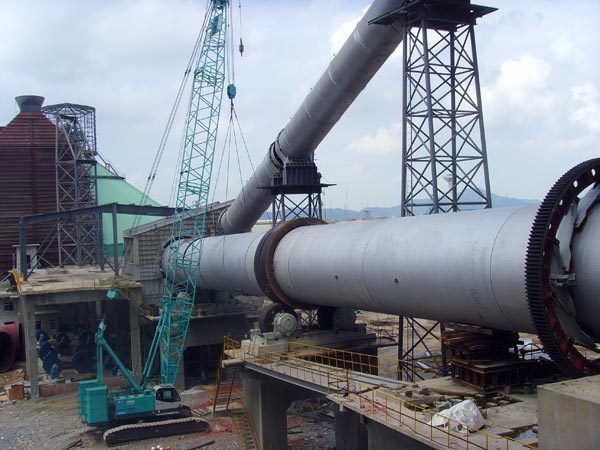
The heart of the installation is a rotary kiln with the following principal dimensions:
| Parameter | Specification |
|---|---|
| Shell diameter | φ2.5 m |
| Kiln length | 50 m |
| Kiln slope | 3.0–3.5% |
| Shell rotational speed | 0.62–1.86 rpm |
| Drive motor power | 55 kW |
| Design capacity | 150–180 t/day ZnO |
The kiln shell is fabricated from 20 mm thick steel plate, internally lined with high‑alumina refractory bricks in the high‑temperature zone and lightweight insulating castables in the preheat and cooling sections. The shell is supported at multiple stations by tire rings (rolling rings) mounted on trunnion roller assemblies with bronze‑bushed bearings, water‑cooled to maintain oil temperatures below 25 °C.
A thrust roller (retaining wheel) prevents axial migration of the kiln shell. The drive system employs a girth gear and pinion arrangement powered through a variable‑frequency motor and reducer, enabling precise speed adjustment to match process requirements.
The kiln head and kiln tail are sealed with zirconium‑containing ceramic fiber blanket labyrinth seals, minimizing cold air infiltration and heat loss.
3.4 Slag Water‑Quenching System
Discharged kiln clinker — now largely depleted of zinc — falls from the kiln head into a water quench tank where it is rapidly cooled and fragmented. A chain‑scraper conveyor removes the quenched slag, which is stockpiled for sale as construction aggregate or returned to the steel mill. A closed‑loop water circulation system with settling ponds minimizes freshwater consumption.
3.5 Oxidation and Cooling System
The zinc‑laden kiln gases exit the kiln tail at approximately 500–600 °C and first pass through an oxidation settling chamber (sometimes integrated with a waste‑heat boiler), where:
Heavier particulates (unreduced ore fines, iron oxides) settle out by gravity — the first stage of separation.
Incomplete combustion products are further oxidized as they contact residual oxygen in the gas stream, ensuring complete conversion of zinc vapor to ZnO dust.
Temperature is reduced to 250–300 °C through water‑cooled wall tubes, recovering thermal energy as steam.
The gas then enters a serpentine‑tube surface cooler (11 banks of chevron‑type tubes), where temperature is further reduced to below 160 °C. This cooler also acts as a secondary settling device, collecting heavier oxide particles in individual hoppers beneath each tube bank.
3.6 Dust Collection and Product Bagging System
The cooled gas stream, now carrying fine ZnO dust, enters a pulse‑jet bag filter operating at 110–130 °C. The filter houses over 2,200 high‑temperature‑resistant filter bags of 130 mm diameter. Collected zinc oxide is periodically discharged through rotary airlock valves into a pneumatic conveying system that transports the finished product to weighing and packaging stations.
The collected ZnO product meets the following quality specifications:
| Parameter | Unit | Value |
|---|---|---|
| ZnO content (dry basis) | % ≥ | 99.7 |
| Metallic zinc | % | 0 |
| Lead oxide (PbO) | % ≤ | 0.01 |
| Manganese oxide | % ≤ | 0.0001 |
| Copper oxide | % ≤ | 0.0002 |
| HCl‑insoluble matter | % ≤ | 0.006 |
| Loss on ignition | % ≤ | 0.10 |
| Residue on 45 μm sieve | % ≤ | 0.10 |
| 105 °C volatile matter | % ≤ | 0.30 |
3.7 Flue Gas Desulfurization System
Sulfur dioxide generated during the roasting of sulfide‑bearing feedstocks is removed in a three‑stage countercurrent packed scrubber tower. An alkaline slurry (typically lime or sodium hydroxide solution) is sprayed downward through hollow plastic packing balls while the SO₂‑laden gas flows upward. The neutralization reaction produces calcium sulfite sludge, which is dewatered in a plate‑and‑frame filter press and disposed of as solid waste. Treated stack emissions contain less than 400 mg/m³ SO₂, meeting Indonesian environmental standards.
4. Working Principle
The zinc oxide rotary kiln operates on the principle of high‑temperature carbothermic reduction followed by vapor‑phase oxidation — a process widely known as the Waelz process.
4.1 Thermal Zones
As the kiln rotates, the pelletized charge advances from the tail (feed end) toward the head (discharge end), passing through three distinct thermal zones:
Drying and Preheating Zone (~12 m, 650–700 °C): Moisture is driven off and the charge is progressively heated. Zinc compounds begin to decompose.
Intermediate Zone (~18 m, 700–850 °C): The solid‑state reduction reaction accelerates. Carbon in the coke reacts with zinc oxide and zinc ferrite:
ZnO + C → Zn(g) + CO
ZnFe₂O₄ + C → Zn(g) + Fe + COHigh‑Temperature Reduction Zone (~18 m, 850–1,200 °C): This is the primary reaction zone where the bulk of zinc is reduced to metallic vapor. The boiling point of zinc is 907 °C, so at operating temperatures of 1,150–1,200 °C the reduced zinc is entirely in the vapor phase. Intense yellow flames are visible above the tumbling bed, indicating vigorous zinc volatilization.
4.2 Oxidation of Zinc Vapor
The metallic zinc vapor, together with other volatile metals (Pb, Cd), is swept out of the kiln by the forced‑draft air flow (typically 3–4 m/s) in a direction counter‑current to the material flow. As the zinc vapor contacts oxygen in the gas phase, it is rapidly oxidized:
2Zn(g) + O₂ → 2ZnO(s)
This exothermic reaction produces the characteristic white ZnO fume, which is carried with the flue gas into the downstream collection system.
4.3 Key Process Control Parameters
| Parameter | Optimal Range | Significance |
|---|---|---|
| High‑temperature zone temperature | 1,150–1,200 °C | Ensures complete zinc reduction |
| High‑temperature zone length | ≥ 15 m (≈⅓ of kiln length) | Sufficient residence time for reaction |
| Material residence time | ≥ 1.5 hours | Allows thorough zinc volatilization |
| Kiln tail pressure | Slight negative pressure | Prevents gas leakage, draws volatiles toward collection |
| Coke ratio | 65–70% of ore weight | Maintains high temperature and reducing atmosphere |
| Slag zinc content | < 2.0% | Indicator of process efficiency |
Improper temperature control — either too high (causing excessive refractory corrosion and ring formation) or too low (leading to incomplete reduction and sticky, zinc‑rich slag) — can severely disrupt operations.
5. Environmental and Safety Measures
The Indonesian installation incorporates several environmental features:
Closed‑loop water quenching for slag, with recirculated cooling water.
Waste‑heat recovery from the oxidation settling chamber, generating steam for auxiliary heating.
Three‑stage flue gas desulfurization ensuring SO₂ emissions below 400 mg/m³.
Pulse‑jet bag filtration achieving particulate capture efficiency >99.5%.
Automated kiln control system with real‑time temperature monitoring, speed adjustment, and alarm functions.
6. Advantages and Performance Summary
Based on the operating experience of comparable installations, the 180 TPD zinc oxide rotary kiln line in Indonesia offers the following advantages:
High zinc recovery rate: The Waelz process achieves zinc volatilization rates exceeding 95%, with slag zinc content consistently below 2%.
Low fuel consumption: Optimized coke ratios and waste‑heat recovery reduce specific energy consumption by 12–15% compared to older designs.
Continuous, stable operation: Robust mechanical design and automated controls enable runs of 12–14 months between scheduled maintenance shutdowns.
Versatile feedstock acceptance: The system can process zinc ores, industrial residues, steel‑plant dusts, and mixed zinc‑bearing waste streams.
Compact footprint: The integrated seven‑subsystem layout requires fewer pieces of equipment than competing hydrometallurgical routes, reducing capital investment.
Compliant emissions: Combined bag‑filter and wet‑scrubber treatment meets both Indonesian and international environmental standards.
7. Conclusion
The 180 TPD zinc oxide rotary kiln project in Indonesia represents a proven, cost‑effective solution for converting diverse zinc‑bearing raw materials into high‑purity zinc oxide. By combining the established Waelz reduction‑volatilization process with modern engineering, automated control, and comprehensive environmental protection systems, the facility achieves high recovery rates, stable product quality, and long campaign life — setting a benchmark for zinc oxide production in the ASEAN region.